

Turn on the news during a high profile trial and it can feel like chaos. Commentators argue. Social media explodes. Everyone thinks they know what will happen next. But inside the courtroom, it’s not chaos at all; it’s strategy. Every question, every objection, every pause is deliberate.
That is what most people never see.
When you strip away the headlines, trials are about structure, preparation, and protecting constitutional rights. Whether the case involves an international indictment or a Maryland homicide prosecution, the core mission stays the same: make the government prove its case and protect the accused at every step.
Tom Maronick Jr. regularly breaks down these cases for the public, not for drama, but for clarity. Because once you understand the strategy behind the scenes, the legal system makes a lot more sense.
International Indictments Explained: What Federal Charges Really Mean
When a foreign president gets arrested and indicted in the United States, it sounds historic. Political. Almost unreal. But legally, the process is far more straightforward than the headlines suggest.
Tom Maronick Jr. addressed this directly during his appearance on DC News Now in January following the arrest of Nicolás Maduro. The media attention was intense, but the legal framework was familiar.
A federal indictment is not symbolic. It is a formal charge issued after prosecutors present evidence to a grand jury. If probable cause exists, charges move forward. That does not change because the accused is a foreign head of state.
Even in international cases, federal prosecutors must:
- Establish jurisdiction tied to U.S. law
- Present sufficient evidence to a grand jury
- Follow procedural rules
- Meet constitutional standards once the defendant appears in court
As Maronick explained during the interview, as long as there is a valid U.S. indictment, courts have the authority to bring the accused before a federal judge.
The likely defense is sovereign immunity. Maduro signaled that strategy in court, stating that he is the constitutional head of Venezuela and that the charges are false. His legal team is expected to argue that he cannot be tried under U.S. law and that his capture violated Venezuelan sovereignty.
The headline may feel unprecedented. The courtroom process is not. Once inside a federal courtroom, the same rules apply. The government carries the burden. The defense can challenge every step. Constitutional protections remain firmly in place. So far, the sovereign immunity argument has not stopped the prosecution, and the case continues to move forward in federal court following his January not guilty plea.
Should A Defendant Testify: The Trial Strategy Nobody Sees
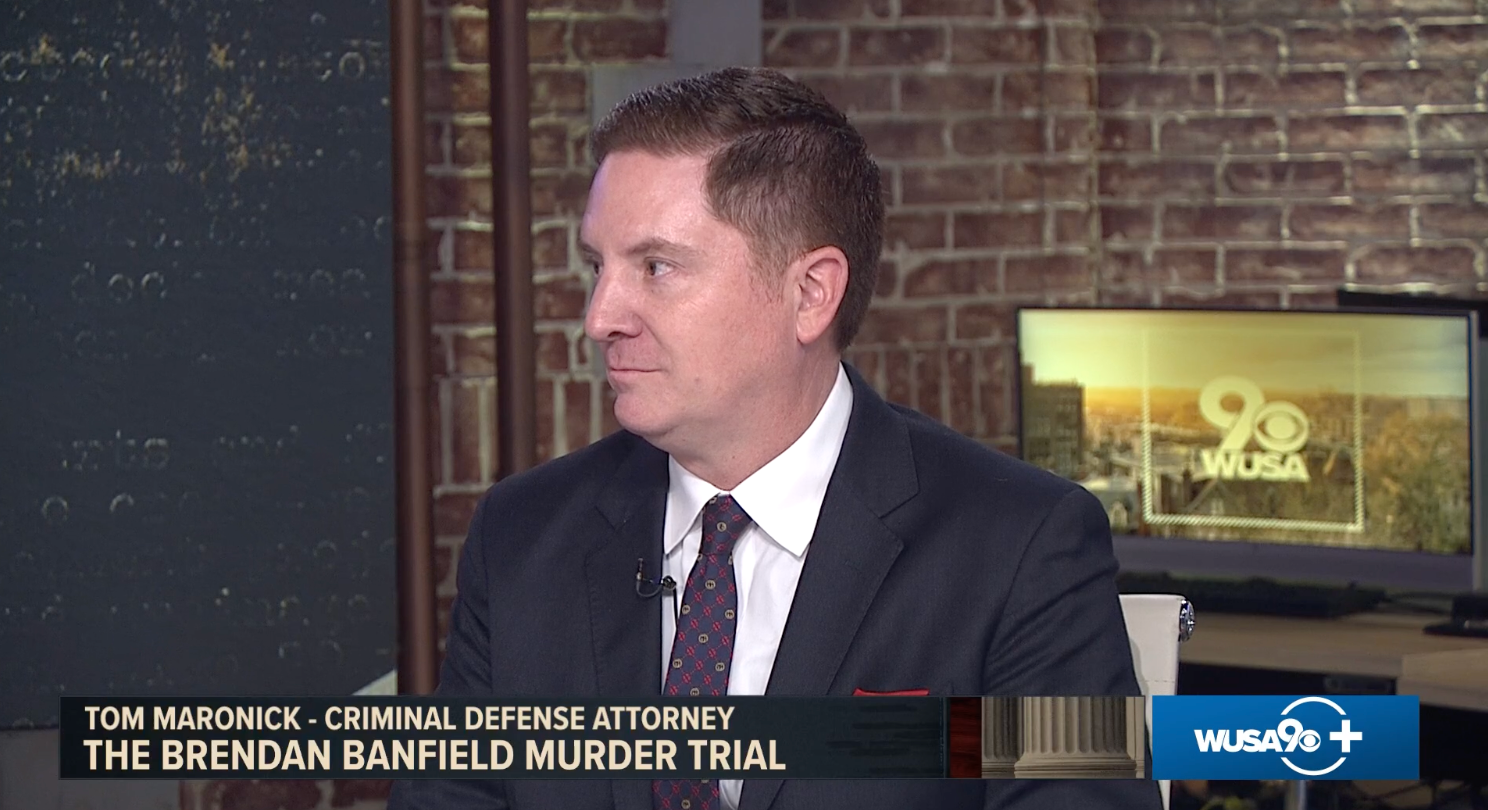
During the WUSA9 coverage of the Banfield au pair trial, one question kept coming up: Should Banfield take the stand?
At the time, it was one of the most debated strategic decisions in the courtroom. If he maintained his innocence, why not testify? Why not tell the jury his side directly?
As Tom Maronick Jr. explained during the segment, that decision is never emotional. It is strategic.
When a defendant testifies, jurors gain direct access to the accused. That can humanize someone. It can clarify timelines. It can create connection. But it also opens the door to cross examination, and cross examination is designed to challenge credibility in real time. One inconsistent answer can shift momentum instantly.
Ultimately, Banfield did testify in his own defense. The jury later convicted him, and he has since been sentenced. The outcome underscores the reality Maronick highlighted during the coverage: taking the stand is always a calculated risk, not a guaranteed advantage.
The decision to testify depends on several factors: the strength of the prosecution’s case, how the defendant performs under pressure, how jurors are reacting, and whether the defense has already created reasonable doubt without exposing the client to cross examination.
And here is the key principle that never changes.
The defense does not have to prove innocence. The prosecution must prove guilt beyond a reasonable doubt. That burden never shifts.
In his commentary, Maronick emphasized that strategic decisions, whether to testify, call additional witnesses, or file certain motions, always tie back to that burden. If the state has not met it, restraint can sometimes be the stronger play. If the defense believes testimony strengthens the narrative, it becomes a tactical decision made with full awareness of the risks.
Trial strategy also involves:
Evidence Control
Forensic findings, digital communications, and timelines must be presented clearly and challenged precisely.
Jury Focus
Jurors evaluate credibility, consistency, and demeanor just as closely as they evaluate physical evidence.
Long Game Planning
Opening statements frame the theory of the case. Cross examination tests the state’s narrative. Closing arguments reinforce where reasonable doubt exists.
In high profile cases like Banfield’s, the public sees dramatic testimony and emotional moments. Inside the courtroom, it remains disciplined decision making. Every move is measured against one question: does this help or hurt the defense when the jury begins deliberating?
That is the trial strategy most people never see.
High Profile Criminal Cases In The News: The Value Of Legal Analysis
When a major trial dominates the news, people form opinions quickly. That is human nature. But trials do not run on opinion. They run on rules.
Legal commentary serves a purpose. It explains why a judge limits testimony. It clarifies why certain evidence does not come in. It reminds viewers that emotional testimony is not the same as legal proof.
Tom Maronick Jr. often emphasizes the presumption of innocence during media appearances. That principle is not symbolic. It is operational. Every defendant starts at zero. The government must build from there.
Without that reminder, public narratives can distort how people understand justice.
Clear legal analysis keeps the focus where it belongs: on procedure, burden of proof, and constitutional safeguards.
High Stakes Criminal Defense: Why Complex Cases Require Precision
High profile domestic cases, especially those involving layered relationships or forensic evidence, require intense organization.
Defense teams often sift through:
- Extensive digital communications
- Forensic timelines
- Expert analysis
- Conflicting witness accounts
Momentum can shift quickly. One witness can strengthen or weaken a theory. A forensic detail can alter interpretation. That is why adaptability matters. But adaptability does not mean improvisation. It means preparing for multiple contingencies.
Opening statements frame the story. Cross examination tests credibility. Closing arguments pull the threads together and spotlight reasonable doubt.
It is methodical work. And it demands focus.
Criminal Charges In The Media: Your Rights Still Come First
No matter how serious the accusation or how loud the media coverage becomes, constitutional protections do not disappear.
Every defendant has:
- The Right To Counsel: Legal representation ensures procedures are followed correctly.
- The Right To Remain Silent: No one can force self incriminating testimony.
- The Right To Due Process: The government must follow established legal standards.
- The Right To Confront Witnesses: The prosecution’s witnesses must appear in court and be subject to cross examination
In high publicity cases, criminal defense attorneys may fight to limit prejudicial evidence or even move the trial to protect impartiality. These safeguards exist for a reason. They prevent verdicts driven by emotion instead of law.
And they apply just as strongly in a Maryland courtroom as they do in nationally televised trials.
Media Coverage In Maryland Criminal Defense Cases: How It Affects Trial Strategy
Modern trials unfold in real time online. News updates hit instantly. Commentary spreads within minutes. That creates pressure.
But inside the courtroom, the focus stays narrow. Evidence rules govern what jurors can hear. Judges enforce procedure. Lawyers work within those constraints.
Legal commentary in the media helps filter noise. It separates speculation from statute. It explains why certain courtroom moves matter and why others do not.
While the public conversation may be loud, trial strategy remains disciplined and grounded in law.
Maryland Criminal Defense Strategy: What This Means For You


Here is the part that matters most.
The same strategic principles you see in high profile cases apply to everyday criminal defense in Maryland. Preparation matters. Early intervention matters. Protecting your rights from the start matters.
If you are under investigation or facing charges, decisions made in the first days can shape everything that follows. Evidence must be preserved. Statements must be handled carefully. Legal strategy must be deliberate.
Maronick Law LLC represents clients across Maryland, including Towson, Bel Air, Ocean City, Westminster, and surrounding communities. Our focus remains steady: protect your rights, challenge the evidence, and hold the state to its burden.
Facing the legal system can feel overwhelming. But once you understand how strategy works, it becomes less mysterious and more manageable.
If you need guidance, contact Maronick Law LLC to schedule a free and confidential consultation. The right strategy, built early, can make a measurable difference in your future.
Disclaimer: This blog is intended for informational purposes only and does not establish an attorney-client relationship. It should not be considered as legal advice. For personalized legal assistance, please consult our team directly.